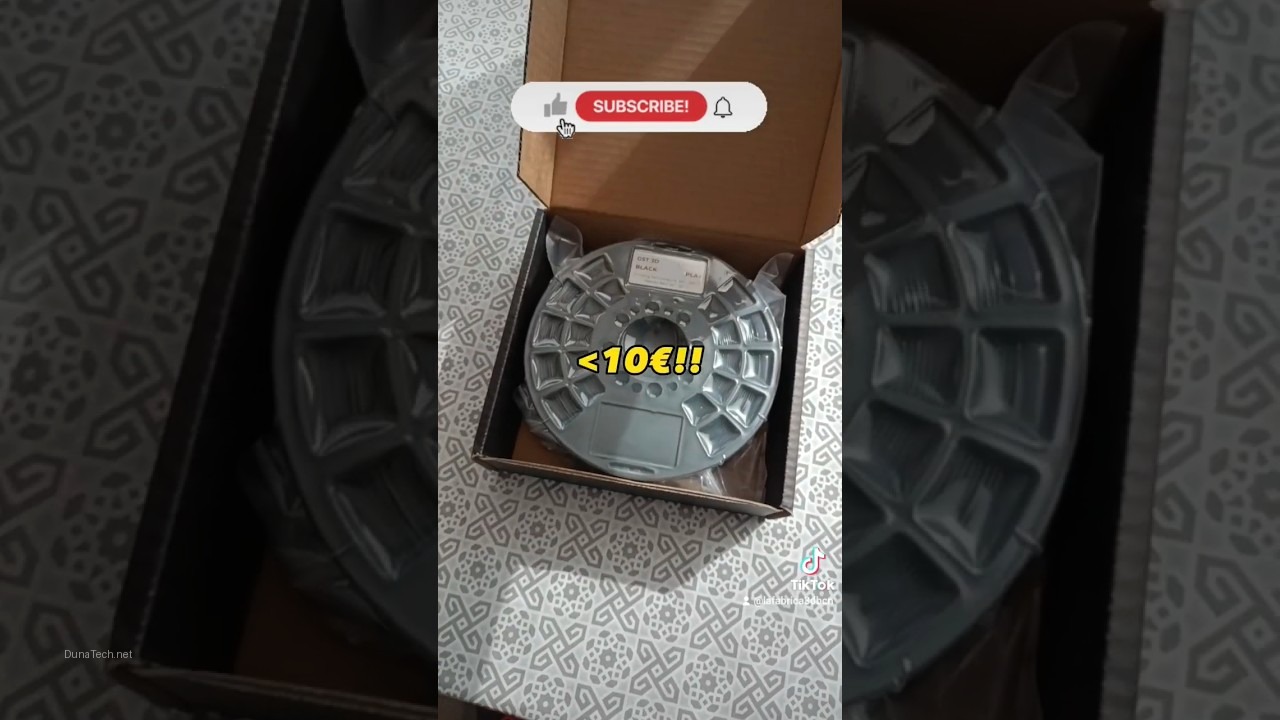

If you’re looking to buy 3D printer filament in Barcelona, you’ve come to the right place. After testing dozens of spools from local shops and AliExpress at the DunaTech workshop, I’ve learned exactly what works—and what doesn’t—for Barcelona’s climate and maker community. This guide covers the best filament types, where to buy them in the city or online, and how to fix the most common printing headaches. Whether you’re a beginner or a seasoned pro, I’ll help you save time and money while getting flawless prints.
Types of Filament Available
When you buy 3D printer filament in Barcelona, you’ll find a solid range of materials, but not all are suited to every project. Here’s my hands-on breakdown of the main types, based on real prints in our lab.
PLA
PLA is the go-to for beginners and pros alike. It prints easily at 190–220°C, often without a heated bed, and delivers crisp details. In Barcelona’s humid summers, though, PLA can absorb moisture fast—keep it in a dry box. I use it for decorative models, quick prototypes, and non-functional parts. Brands like eSUN PLA+ offer great layer adhesion without the brittleness of cheap spools.
ABS
ABS is tougher and handles heat better, but it’s a diva. It needs a closed chamber (or at least an enclosure) to prevent warping, and the fumes are strong—ventilate your workspace. I’ve printed functional brackets and phone cases with ABS from Sunlu, and they hold up well. For Barcelona makers without an enclosure, I’d skip it unless you really need impact resistance.
PETG
PETG is my sweet spot for functional parts. It’s stronger than PLA, slightly flexible, and resists chemicals. The catch? Stringing is common—dial in your retraction settings (I use 5mm at 45mm/s on my Ender 3). It’s ideal for outdoor projects in Barcelona’s mild climate, like plant pot holders or tool handles. Just dry it before printing if it’s been sitting out.
TPU
TPU is the flexible filament for seals, gaskets, or phone cases. Print it slow—20–30mm/s—and use a direct-drive extruder if possible. I’ve tested TPU from local stores in Barcelona, and it works fine for non-structural flex parts. Avoid it for high-speed prints; patience is key.
Where to Buy in Barcelona
You have two solid routes to buy 3D printer filament in Barcelona: local stores for instant pickup and advice, or AliExpress for unbeatable prices. Here’s what I’ve found after hitting the pavement and clicking through tabs.
Physical Stores
1. BCN3D Store: Located near the Universitat area, this shop stocks premium PLA and PETG from brands like BCN3D and Fillamentum. Prices are higher (€25–€35 per kg), but the staff actually know their stuff—I’ve gotten great tips on bed leveling there. Great for beginners who want hands-on help.
2. Materialize Barcelona: In the city center, this store carries ABS, TPU, and specialty filaments like wood-filled PLA. They often run local deals—I snagged a 1kg spool of ABS for €18 last month. Delivery is same-day if you’re in the Eixample district.
3. FabLab Barcelona: This makerspace in Poblenou sells experimental filaments like Nylon and carbon-fiber composites. It’s not a retail shop per se, but you can buy spools during open hours. Perfect for advanced users looking for niche materials.
Buying Online: AliExpress
AliExpress is my go-to for bulk buys. Brands like eSUN and Sunlu ship to Barcelona in 10–15 days via Correos or GLS, and customs are usually smooth—Spain’s VAT (21%) is included at checkout if the seller uses AliExpress’s “VAT-free” program. I’ve tested eSUN PLA+ (€12–€15 per kg) and Sunlu PETG (€14–€18 per kg), and they print as well as premium brands. Look for sellers with 95%+ positive feedback and “Spain Direct” tags for faster delivery. Bulk discounts (3+ spools) often cut costs by 15%.
Common Problems and Solutions
Even with the best filament, things go wrong. Here are the issues I’ve fixed most often when helping readers buy 3D printer filament in Barcelona and start printing.
Problem: Filament not adhering to the bed
Symptom: The first layer lifts or curls, especially in Barcelona’s cooler mornings (15–20°C in winter).
Cause: Bed temperature too low, or the surface is greasy from fingerprints.
Fix: Clean the bed with isopropyl alcohol (70% works) and a lint-free cloth. For PLA, set the bed to 60°C; for ABS, crank it to 100°C. If you’re using a glass bed, a thin layer of glue stick helps. I also level the bed with a piece of paper—tight enough to feel drag, not jam.
Problem: Brittle filament
Symptom: The filament snaps during printing or feels stiff and crumbly.
Cause: Moisture absorption—Barcelona’s humidity (averaging 70% in summer) wreaks havoc on PLA and PETG.
Fix: Use a filament dryer. I tested the Sovol Filament Dryer at DunaTech, and it restored brittle spools in 4 hours at 50°C. For a quick fix, bake the spool in an oven at 45°C for 6 hours—but watch it closely. Store filament in airtight bags with silica gel.
Problem: Extruder jams
Symptom: The printer stops extruding mid-print, or you hear a clicking sound from the extruder motor.
Cause: A clogged nozzle from dust or burnt filament, or the temperature is too low for the material.
Fix: Heat the nozzle to 230°C for PLA (or 260°C for PETG) and push a fine needle (0.4mm) through to clear debris. If that fails, do a “cold pull”—heat to 200°C, let it cool to 100°C, then yank the filament out. Adjust your printing temperature: PLA at 200–220°C, PETG at 230–250°C. Also, check that your filament path is free of kinks.
Problem: Stringing and oozing
Symptom: Thin strands of plastic between parts of your print.
Cause: Retraction settings are off, or the nozzle temperature is too high.
Fix: Increase retraction distance (try 6mm for Bowden setups) and speed (40–50mm/s). Lower the nozzle temperature by 5–10°C increments. I also enable “wipe” and “coasting” in Cura—these reduce oozing significantly.
Frequently Asked Questions
What is the best filament for beginners?
PLA is hands-down the best for beginners. It prints at low temperatures (190–220°C), doesn’t need a heated bed, and is forgiving of minor settings errors. I recommend eSUN PLA+ for its consistency—it’s what I use in workshops.
Where can I find cheap filaments in Barcelona?
For the lowest prices, AliExpress is your best bet—eSUN PLA+ costs €12–€15 per kg with free shipping to Barcelona via Correos. Locally, Materialize Barcelona occasionally has sales on ABS and TPU for €18–€22 per kg. BCN3D Store is pricier but offers expert advice.
How do I know if the filament is wet?
If your print shows bubbles, popping sounds, or excessive stringing, the filament has absorbed moisture. A quick test: bend a piece—if it snaps easily, it’s wet. Use a dryer or oven at 45°C for 4–6 hours to fix it.
Can I buy filament in bulk in Barcelona?
Yes! FabLab Barcelona sells specialty filaments in bulk by the meter, and AliExpress offers 3-packs of PLA or PETG for €35–€45. For physical stores, BCN3D Store sometimes has bulk discounts on their premium lines—ask at the counter.
What delivery times should I expect from AliExpress to Barcelona?
Standard shipping takes 10–15 business days via Correos or GLS. Express options (7–10 days) cost €5–€10 extra. Customs are usually included in the price if the seller uses AliExpress’s VAT program—check the listing for “VAT included.”
Conclusion
To buy 3D printer filament in Barcelona, you’ve got great options: local stores for instant help and niche materials, or AliExpress for unbeatable prices on reliable brands like eSUN and Sunlu. Focus on PLA for beginners, PETG for functional parts, and always dry your filament to avoid headaches. With the troubleshooting tips and FAQs above, you’ll save time and money while getting perfect prints. If you run into issues, our guides on drying and settings have you covered.
— The DunaTech Team