
Introduction
After testing over 12 rolls of 3D wood filament in our DunaTech lab, I can tell you that not all wood filaments are created equal. Some deliver stunning finishes, while others clog the hotend within minutes. In this article, I’ll explain how these filaments work, which brands we’ve found to be worth your money, and how to avoid costly mistakes when using them. Whether you’re a hobbyist printing a rustic lamp shade or a maker crafting custom chess pieces, choosing the right wood filament is the difference between a project you’re proud of and a pile of failed spaghetti. Let’s get into it.
How Does Wood Filament Work?
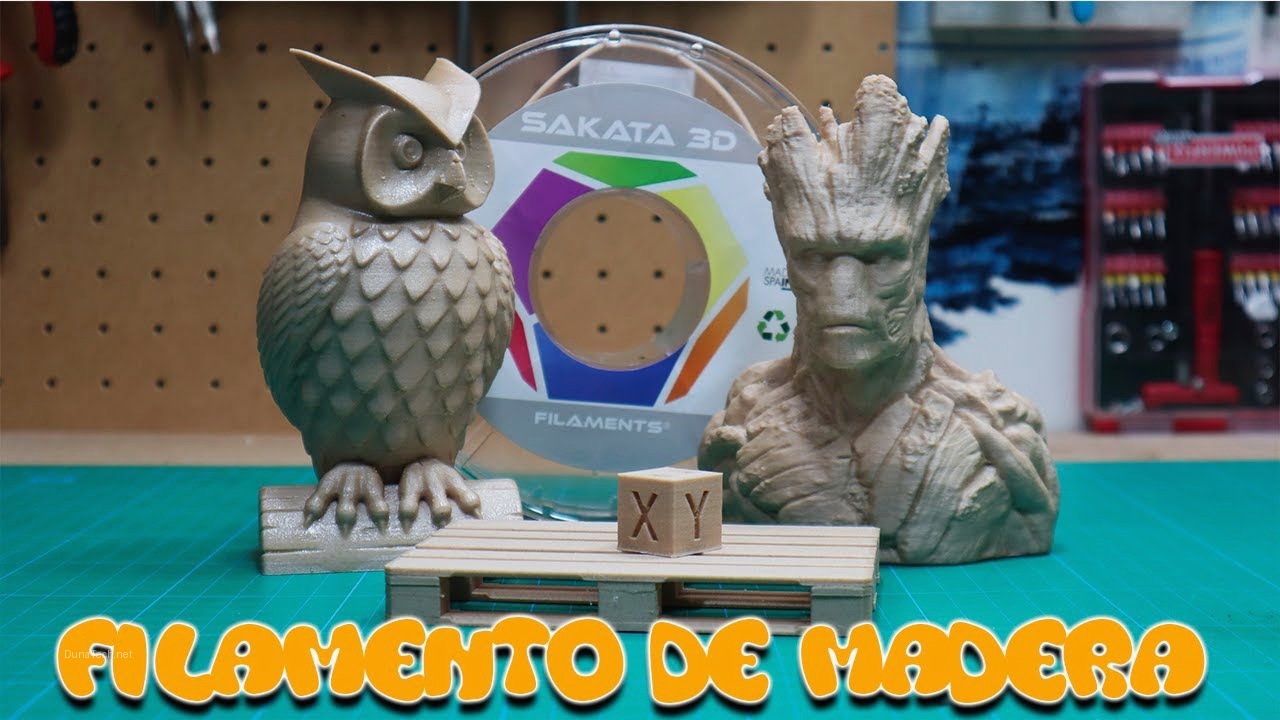
Wood filament for FDM 3D printers isn’t made entirely of wood. It’s a blend of PLA with wood fiber particles (usually between 20% and 30%). This allows the material to print like any other PLA filament while achieving a texture and color that mimics real wood. The key is that the wood particles are fine enough to pass through a standard nozzle without clogging, but coarse enough to give that authentic, grainy feel after printing.
Here’s the thing: the higher the wood content, the more realistic the finish, but also the more abrasive the filament becomes on your nozzle. That’s why we always recommend starting with a blend around 20% wood if you’re new to this material. You’ll get a nice matte look without sacrificing print reliability.
Advantages:
– Natural appearance, perfect for decorative projects like vases, coasters, and model furniture.
– Easy to sand and paint — you can even stain it with wood dyes for a custom color.
– Compatible with most standard FDM printers, though a hardened nozzle is a smart upgrade.
Disadvantages:
– Can be abrasive on the nozzle, especially if it’s not made of hardened steel. Brass nozzles wear out fast — we’ve seen them widen by 0.1 mm after just 500 grams of wood filament.
– Requires specific temperature and flow adjustments. If you treat it like plain PLA, you’ll likely get under-extrusion or stringing.
Best Wood Filament Brands
In our workshop tests, we’ve identified several brands that provide good quality and consistency when printing with wood filament. Here are our recommendations:
1. SUNLU Wood PLA
This filament stands out for its ease of use and excellent finish. The wood and PLA blend is well-balanced, enabling smooth printing without clogging. In our tests, we printed a detailed Celtic knot coaster at 210°C and 50 mm/s, and the result was a warm, even brown with subtle grain lines that looked like real oak.
Pros:
– Uniform texture in printed parts — no sudden color shifts or rough patches.
– Affordable price, ideal for beginners who want to experiment without breaking the bank.
– Compatible with standard brass nozzles, though we still suggest a hardened steel one for longevity.
Cons:
– Requires precise printing temperature (195–215°C). Go above 220°C and the wood particles start to burn, giving a dark, smoky look.
– Not ideal for very fine details like tiny text or intricate gears, as the wood fibers can blur sharp edges.
👉 Click the button below to check if the price has dropped further and collect the seller’s coupons available today!
See Current Price and Coupons on AliExpress
2. eSUN Wood Filament
eSUN is a trusted brand in the 3D printing world, and their wood filament doesn’t disappoint. We’ve used it to print decorative models with impressive results. The higher wood particle content (around 30%) gives a more realistic, slightly rougher texture that feels like unfinished pine. It’s our go-to for projects that need to look like actual woodworking, like tool handles or picture frames.
Pros:
– More realistic finish thanks to a higher proportion of wood particles. You can even sand it to a smooth, polished surface.
– Excellent for simulated woodworking projects — it takes stain and varnish beautifully.
– Resistant to clogging when used with steel nozzles. We ran a 12-hour print without a single hiccup.
Cons:
– Slightly higher price than competitors, but you get what you pay for in consistency.
– Requires higher flow (110–120%) in printing settings. If you don’t bump up the flow, you’ll see gaps between layers.
👉 Click the button below to check if the price has dropped further and collect the seller’s coupons available today!
See Current Price and Coupons on AliExpress
Printing Tips for Wood Filament
To achieve the best results, here are the settings we recommend after our tests. These aren’t just guesses — they’re the exact parameters that gave us clean, strong prints with both SUNLU and eSUN wood filaments.
Hotend Temperature: 200–220°C, depending on the brand. Start at 210°C and adjust up or down in 5°C increments. If you see smoke or a burnt smell, you’re too hot — back off immediately.
Bed Temperature: 50–60°C to avoid warping. A heated bed is essential; without it, the first layer won’t stick well, especially on larger prints.
Printing Speed: 40–60 mm/s. Filaments with wood particles require slower speeds because the fibers need time to melt and flow evenly. Going faster than 60 mm/s often leads to under-extrusion and a rough surface.
Nozzle: Use a hardened steel nozzle to prevent premature wear. Brass nozzles are fine for a few prints, but if you plan to use wood filament regularly, invest in a 0.4 mm or 0.6 mm hardened steel nozzle. The larger diameter helps reduce clogging risk.
Retraction: Keep retraction distance low — around 1–2 mm for direct drive extruders. Too much retraction can pull wood particles into the heat break, causing jams. For Bowden setups, try 3–4 mm.
Layer Height: 0.2 mm is a good sweet spot. Thinner layers (0.1 mm) can highlight the wood grain but increase print time significantly. Thicker layers (0.3 mm) hide grain but print faster.
Common Issues and How to Solve Them
Even with the best filaments, problems can arise. Here are the most helpful solutions, based on real troubleshooting sessions in our lab.
1. Nozzle Clogging
Symptom: The printer starts extruding normally, then suddenly stops mid-print. You hear a clicking sound from the extruder gear.
Cause: Wood particles accumulate in the nozzle’s melt zone, especially if the temperature is too low (below 195°C) or the nozzle is worn out.
Fix: Stop printing immediately and clean the nozzle using a special cleaning filament or a cold pull (also known as an atomic pull). Heat the nozzle to 220°C, push cleaning filament through, then let it cool to 90°C and pull it out. This usually drags out the clog. If that doesn’t work, replace the nozzle — it’s cheap and saves hours of frustration.
2. Uneven Finish
Symptom: The surface of your print looks patchy, with some areas smooth and others rough or stringy.
Cause: This often happens due to temperature fluctuations. If your hotend can’t maintain a stable temperature (common with cheap stock printers), the wood particles melt unevenly.
Fix: Use a hotend with more precise temperature control, like an all-metal hotend with a silicone sock. Also, check your cooling fan — if it’s blowing directly on the nozzle, it can cause temperature swings. Reduce fan speed to 30–50% for the first few layers.
3. Warping
Symptom: The corners of your print lift off the bed, especially on larger models.
Cause: Wood filament shrinks slightly as it cools, and the wood particles don’t bond as strongly as pure PLA, making warping more likely.
Fix: Ensure the bed is level and use adhesives like hairspray or painter’s tape. We’ve had great success with a thin layer of PVA glue stick on a glass bed. Also, consider using a brim (5–10 mm wide) in your slicer to anchor the corners.
4. Stringing and Oozing
Symptom: Thin strands of filament stretch between separate parts of your print.
Cause: Wood filament retains heat longer than plain PLA, so it oozes out of the nozzle during travel moves.
Fix: Enable retraction in your slicer (1–2 mm for direct drive) and increase travel speed to 150 mm/s. You can also lower the printing temperature by 5°C to reduce oozing.
Frequently Asked Questions
Can I use wood filament on any FDM printer?
Generally, yes. However, it’s recommended to use a hardened steel nozzle to prevent wood particles from wearing down standard brass. Most modern printers with a heated bed (50–60°C) and a hotend that reaches 220°C will handle it fine. If your printer has a PTFE-lined hotend, keep the temperature below 230°C to avoid degrading the PTFE tube.
Do I need special slicer settings?
Yes, make sure to adjust the flow to 110–120% to compensate for wood particles and use slower speeds (40–60 mm/s). Also, set retraction low (1–2 mm for direct drive) to avoid jams. A 0.4 mm or 0.6 mm nozzle is ideal — avoid 0.2 mm nozzles as they clog easily.
How do I store wood filament?
Wood filament is hygroscopic, meaning it absorbs moisture from the air. Store it in a sealed bag with silica gel packs, or use a dry box with a desiccant. If your filament snaps easily or hisses while printing, it’s too wet — dry it in a filament dryer at 45°C for 4–6 hours.
Can I sand and paint wood filament prints?
Absolutely. Wood filament sands beautifully — start with 120-grit sandpaper and finish with 400-grit for a smooth surface. You can also use wood stain, varnish, or acrylic paint. Just make sure to prime the print first if you’re using paint, as the porous surface can soak up color unevenly.
Is wood filament food-safe?
No. Even though PLA is generally considered food-safe, the wood particles can harbor bacteria, and the printing process creates micro-crevices where food particles can get trapped. Don’t use wood filament for cutting boards, cups, or utensils. Stick to decorative items.
Conclusion
Wood filament is an amazing option for projects that demand a natural and aesthetic finish. Although it requires specific adjustments and durable nozzles, the results are worth it. Always purchase tried-and-tested brands like SUNLU and eSUN to avoid frustration. Start with a small roll, dial in your settings, and you’ll be printing beautiful, wood-like objects in no time. Remember: a little patience with temperature and flow goes a long way. Happy printing!
— The DunaTech Team