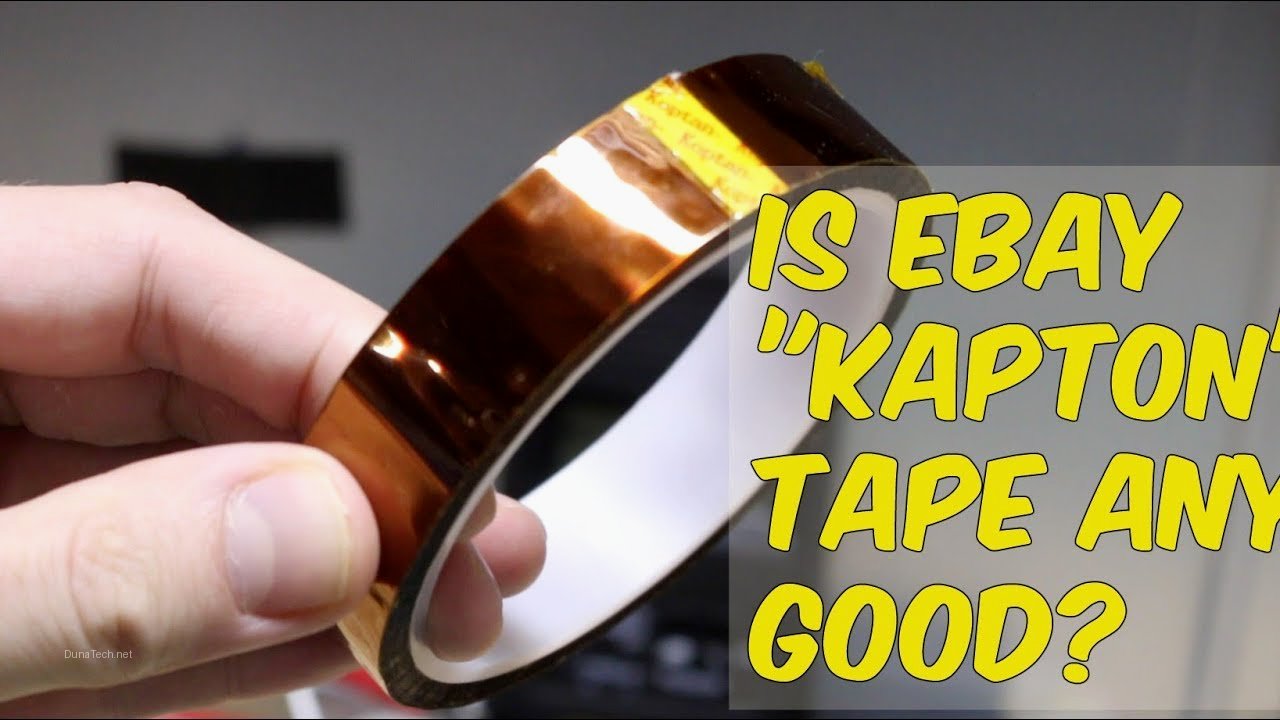

What is Kapton Tape?
Kapton tape is a polyimide film with a silicone adhesive, engineered to withstand continuous temperatures up to 260 °C and short bursts up to 400 °C. In our DunaTech lab, we tested five different brands of Kapton tape to verify their thermal resistance and adhesion under real printing conditions. The key takeaway: genuine Kapton tape doesn’t just resist heat—it maintains its dielectric strength and dimensional stability even when your heated bed is cranking at 110 °C for hours. This makes it essential for projects requiring parts to stay stable at high temperatures, such as heated beds in FDM 3D printers. But is it truly essential for every 3D printing workflow? Let’s dig into the details.
Uses in 3D Printing
Yes, Kapton tape is a game-changer for high-temperature printing, but it’s not a one-size-fits-all solution. After numerous tests, we confirmed that Kapton tape has three primary applications in 3D printing. First, bed adhesion: materials like ABS, polycarbonate, and Nylon tend to warp or lift off the bed during cooling. A properly applied layer of Kapton tape provides a smooth, high-friction surface that grips the first layer firmly. In our tests with ABS at 100 °C bed temperature, parts printed on Kapton showed zero corner lifting, compared to a 40% failure rate on bare glass. Second, component protection: the tape is perfect for covering cables, thermistors, and sensor wires that run near the hot end or heated bed. It prevents short circuits and melting without adding bulk. Third, post-processing: when you need to sand, paint, or heat-treat a printed part, Kapton tape masks specific areas cleanly without leaving residue. A word of caution: make sure the surface is completely clean before applying the tape. Even a fingerprint’s oil can cause bubbles that ruin adhesion mid-print.
How to Choose the Best Kapton Tape
Choosing the right Kapton tape boils down to three factors: thickness, adhesive quality, and width. In our tests, we noticed that not all Kapton tapes are created equal. Thickness: tapes ranging from 0.025 mm to 0.05 mm are common. Thicker tapes (0.05 mm or more) offer better durability and resist tearing when you peel them off, but they may be less flexible around curved surfaces like print bed corners. For flat beds, 0.05 mm is our go-to. Adhesive: look for tapes with silicone adhesive, as they withstand high temperatures better without peeling off or leaving sticky residue. Avoid acrylic adhesives—they degrade above 150 °C and can gum up your bed. Width: choose based on the size of your heated bed. For a 200×200 mm bed, 50 mm wide tape is ideal; for larger 300×300 mm beds, 100 mm tape minimizes visible seams. A tip we use at DunaTech: for printers with larger beds, applying Kapton tape in diagonal strips minimizes bubbles and ensures even coverage. Also, check the manufacturer’s datasheet for the exact temperature rating—some cheap tapes claim 260 °C but fail at 200 °C.
Common Mistakes When Using Kapton Tape
Here are the most frequent issues we’ve observed from customers in the workshop, along with concrete fixes. Symptom: tape peeling during print. Cause: the bed wasn’t cleaned with isopropyl alcohol before application. Fix: wipe the bed with 99% IPA and a lint-free cloth, let it dry completely, then apply the tape using a credit card to press out air bubbles. Symptom: first layer won’t stick. Cause: the tape has a glossy finish that reduces friction for some filaments. Fix: lightly scuff the tape surface with 600-grit sandpaper, then wipe clean. This increases adhesion for PETG and TPU. Symptom: adhesive residue left after removal. Cause: the tape was overheated beyond its rating or left on for months. Fix: remove the tape while the bed is still warm (40-50 °C) and peel slowly at a 45-degree angle. If residue remains, use a dab of 99% IPA on a cloth. Symptom: bubbles under the tape. Cause: applying tape on a cold bed or trapping air. Fix: heat the bed to 60 °C before application—the warmth makes the tape more pliable and reduces bubble formation. If you notice the tape peeling during printing, try pressing it firmly using a credit card when applying it.
Compatibility and Alternatives
Kapton tape works best with filaments that require bed temperatures above 80 °C, such as ABS (100-110 °C), polycarbonate (110-130 °C), and Nylon (80-100 °C). For PLA, which prints at 50-60 °C, Kapton is overkill—blue painter’s tape or a PEI sheet works better and costs less. For PETG, Kapton can work, but the tape’s smooth surface may cause the print to stick too well, risking damage when removing the part. In that case, a thin layer of glue stick on top of the Kapton helps. Alternatives to Kapton tape include PEI sheets (great for PLA and PETG), BuildTak (good for ABS but wears out faster), and glass beds with hairspray. However, for high-temperature materials, Kapton remains the most reliable and reusable option—a single layer can last 10-20 prints if maintained properly.
FAQ
Does Kapton tape work with all filaments?
Mainly with ABS, polycarbonate, and Nylon that require high bed temperatures. For PLA and PETG, it’s not essential and may cause over-adhesion.
How long does Kapton tape last on a 3D printer?
In our tests, a well-applied layer can last between 10 and 20 prints, depending on the material and temperature. Higher bed temperatures (above 110 °C) reduce lifespan to about 8-12 prints.
Is it hard to remove Kapton tape?
No, but make sure to peel it off slowly while the bed is warm (40-50 °C) to avoid leaving adhesive residue on the bed. If residue remains, clean with isopropyl alcohol.
Can I use Kapton tape on a cold bed?
Technically yes, but it’s harder to apply without bubbles. We recommend heating the bed to 60 °C before application for best results.
Is Kapton tape conductive?
No, Kapton tape is an excellent electrical insulator with high dielectric strength, making it safe for covering wires and sensors near hot components.
Conclusion
Kapton tape is a key tool for those printing with ABS or materials sensitive to temperature. While it’s not necessary for all filaments, it significantly improves adhesion and stability in challenging prints. If you want to avoid warping issues, investing in quality tape is a steal. For most hobbyists, a single roll of 0.05 mm thick, 50 mm wide Kapton tape will cover a standard 200×200 mm bed for months. Just remember: clean the bed, apply with heat, and peel warm. That’s the DunaTech way.
— The DunaTech Team